Five Questions to Ask Before Giving an AI Agent Access to Business Tools
A short, practical checklist before you connect an agent to your tools.
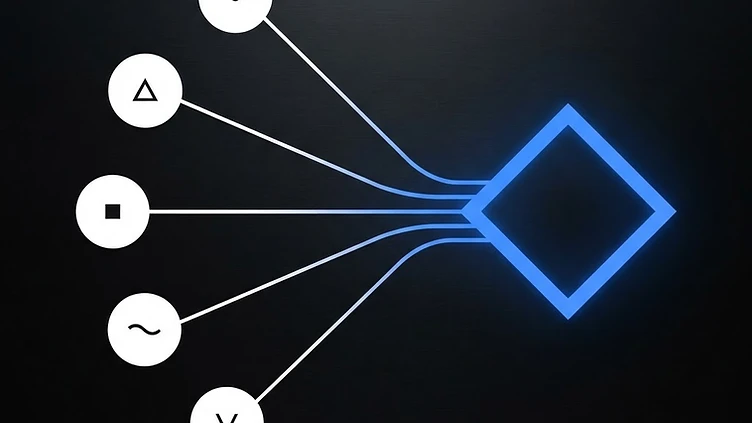
Giving an AI agent access to your business tools is the moment the technology stops being a conversation and starts being an operator. That transition is where most of the benefit lives — and where most of the risk appears. Before you connect an agent to your calendar, your inbox, your customer records, or your finance system, ask five questions. If you cannot answer them clearly, you are not ready to connect.
1. What can the agent access?
Start with the full inventory. Which systems will the agent be able to reach? Which records will it be able to read? Access is not a single switch; it is a set of specific permissions, and the right question is not "can it connect?" but "what exactly can it see?"
Be honest about the full scope. An agent that can read your support inbox can read every message in it, including the ones you would not share freely. An agent that can read your customer database can read every record, not just the ones relevant to its task. List the access before you grant it.
2. What can the agent change?
Reading is different from writing. An agent that can only read is an agent that cannot corrupt your data, but it is also an agent that cannot do much for you. Most useful agents need to change something — send a message, update a record, create a task.
For every change capability, ask whether it is necessary for the task and whether it is reversible. Prefer reversible actions. An agent that drafts a message for you to send is safer than one that sends it. An agent that proposes a record update is safer than one that applies it. The gap between "proposes" and "does" is where your control lives.
3. Who approves consequential actions?
Some actions matter more than others. Sending an email to a customer, changing a price, modifying a production setting — these are consequential, and they should not happen without a person saying yes.
Define, before you connect, which actions require approval and who the approver is. The approver should be someone who can be identified later, not a vague "the team." If the agent can take a consequential action without a named approver, you have delegated more than you intended.
This is not about slowing the agent down. It is about making sure that when something consequential happens, someone chose to let it happen.
4. What is logged?
When the agent acts, what record is kept? A useful log shows what the agent was asked to do, what it did, which tools it called, and what it changed. Without that record, when something goes wrong, the only answer available is "the agent did something," which is not an answer.
Ask the vendor what is logged by default and what you can add. Then make sure the logs are somewhere the agent itself cannot reach. A log the agent can edit is not a log.
Review the logs occasionally, not only when there is a problem. Patterns hide in normal runs — a step that fails often, a permission that is never used, an approval that is always granted without thought.
5. How can access be revoked?
This is the question people forget to ask, because it assumes the deployment will end. Deployments do end — because the use case changes, because the vendor changes, or because something went wrong. When that day comes, you need to be able to take the access back quickly and completely.
Before you connect, know how to disconnect. Which credentials will you revoke? Which integrations will you remove? How will you confirm that no lingering access remains? An agent whose access you cannot fully revoke is an agent you do not fully control.
The point of the questions
These questions are not a barrier to using agents. They are the preparation that makes using agents safe enough to be worth it. An agent connected without answers is a small bet that nothing will go wrong. An agent connected with answers is a deliberate decision to extend your business through a new tool, on terms you chose.
Ask the five questions. Write down the answers. Then connect — or wait until you can.
Editorial Disclosure
This piece was prepared with AI-assisted drafting and reviewed by a human editor.